
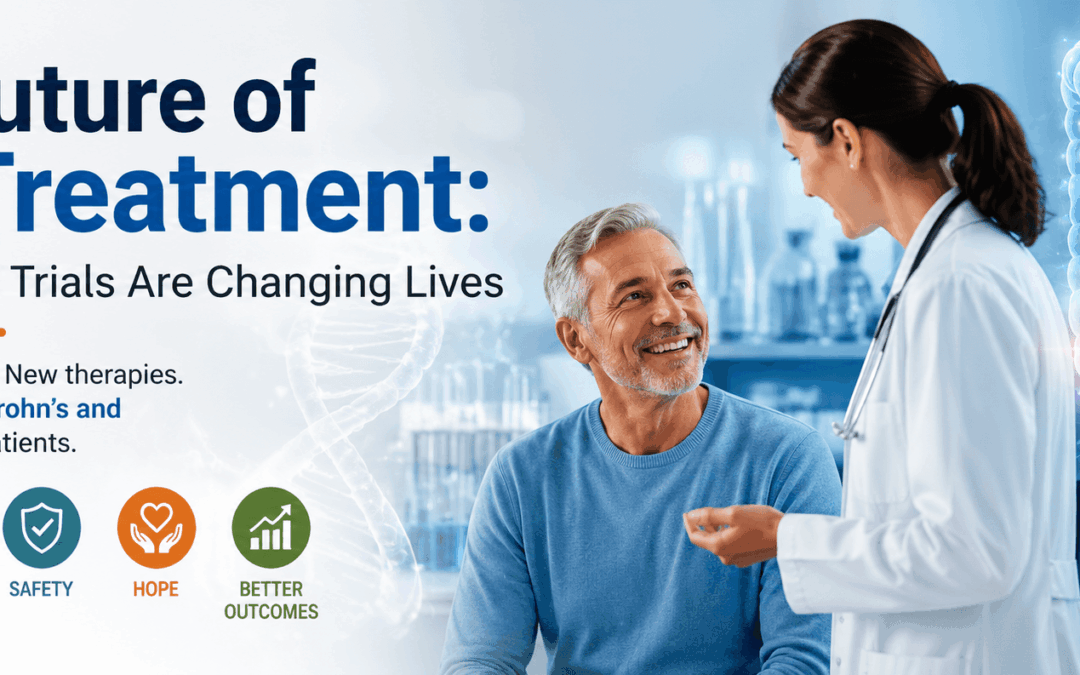
Inflammatory Bowel Disease (IBD), which primarily includes Crohn’s disease and Ulcerative Colitis, affects millions of people worldwide and continues to pose significant challenges for both patients and healthcare providers. These chronic inflammatory conditions of the gastrointestinal tract can have a profound impact on quality of life, causing symptoms such as abdominal pain, chronic diarrhoea, fatigue, weight loss, nutritional deficiencies, and frequent flare-ups.
While treatment options for IBD have improved dramatically over the past two decades, many patients still struggle to achieve long-term remission. Some experience treatment failure, while others develop resistance to medications that were once effective. As a result, the need for innovative therapies remains greater than ever.
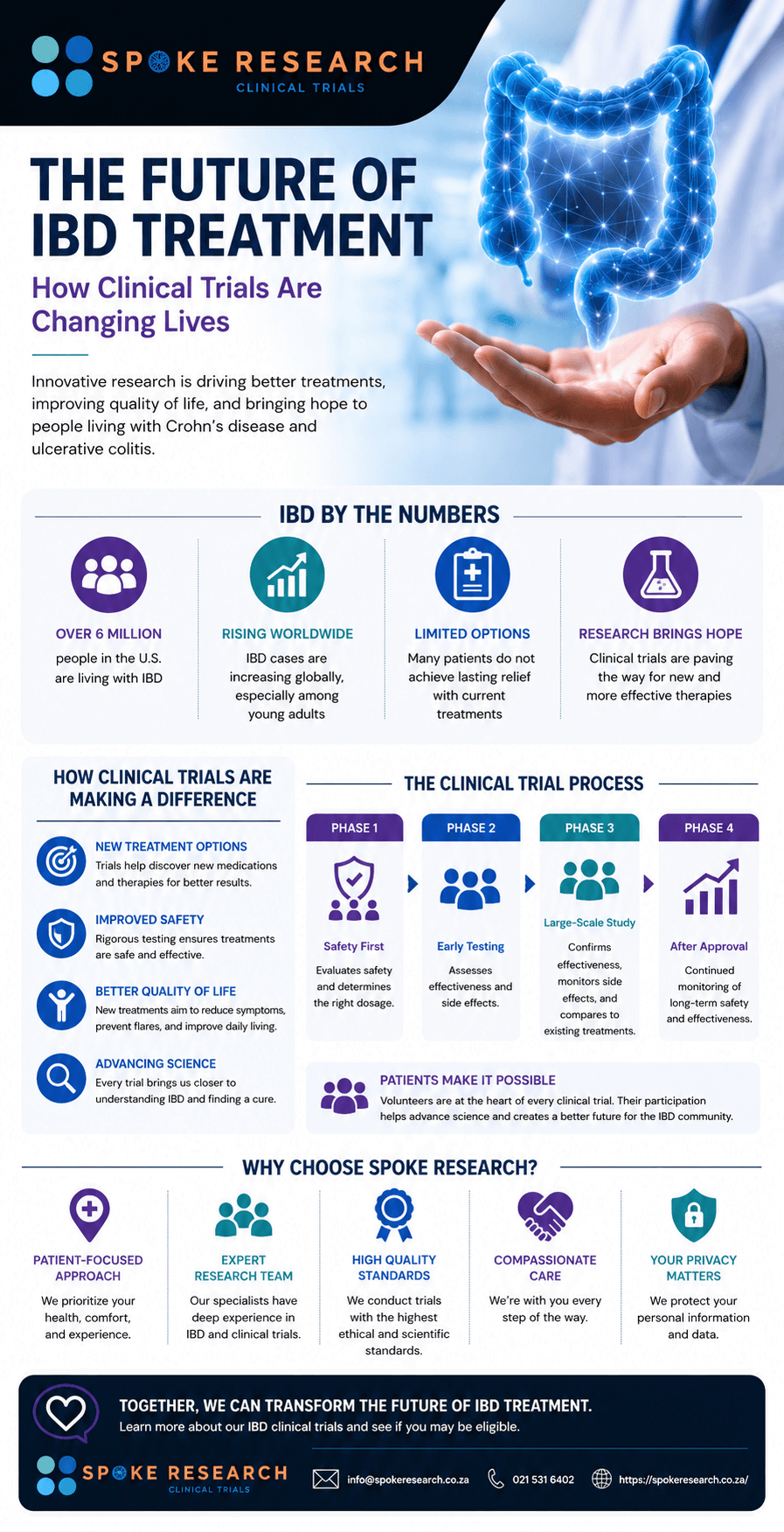
Clinical trials have become one of the most important drivers of progress in IBD treatment. Through carefully designed research studies, new medications and treatment approaches are evaluated for safety and effectiveness before they become widely available to patients. At Spoke Research, clinical trials are helping to shape the future of Crohn’s disease and Ulcerative Colitis treatment by providing patients with access to cutting-edge therapies while contributing to the advancement of medical knowledge.
Understanding the Challenges of IBD
IBD is a chronic autoimmune condition in which the body’s immune system mistakenly attacks the digestive tract, causing ongoing inflammation.
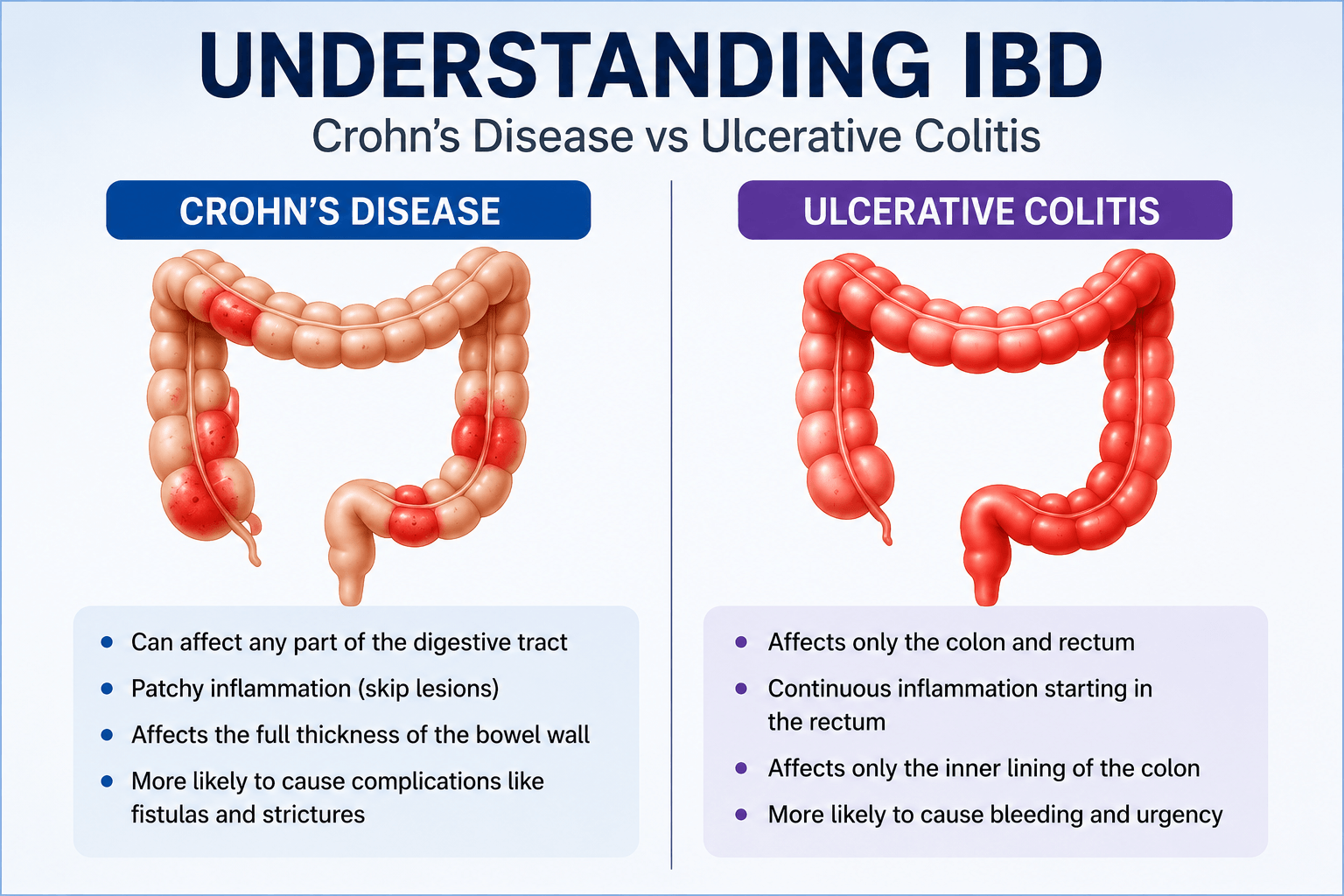
Although Crohn’s disease and Ulcerative Colitis share many similarities, they affect the gastrointestinal tract differently.
Crohn’s disease can affect any part of the digestive system from the mouth to the anus and often involves deeper layers of the bowel wall. Ulcerative Colitis, on the other hand, primarily affects the lining of the colon and rectum.
Despite advances in treatment, many patients continue to face challenges such as:
- Persistent symptoms despite medication
- Frequent disease flare-ups
- Side effects from long-term treatment
- Loss of response to biologic therapies
- Increased risk of surgery and hospitalization
- Reduced quality of life
These challenges highlight the importance of ongoing research aimed at developing safer and more effective treatment options.
Why Clinical Trials Matter
Every approved medication currently used to treat IBD was once investigated through clinical research.
Clinical trials provide researchers with the opportunity to evaluate new therapies, understand how they work, and determine whether they can improve patient outcomes. They are a critical step in bringing innovative treatments from the laboratory into everyday clinical practice.
Without clinical trials, advancements in IBD treatment would not be possible.
Research studies help answer important questions such as:
- Is a new medication safe?
- Does it reduce inflammation effectively?
- Can it help patients achieve remission?
- Does it work better than existing treatments?
- Can it improve long-term quality of life?
By participating in clinical trials, patients contribute directly to the development of future therapies while gaining access to treatments that may not yet be available to the general public.
The Evolution of IBD Treatment
The treatment landscape for IBD has changed dramatically over the years.
Historically, treatment options were largely limited to corticosteroids, aminosalicylates, and immunosuppressive medications. While these therapies remain important, they are not effective for everyone and can be associated with significant side effects.
The introduction of biologic therapies marked a major breakthrough in IBD management. These medications target specific components of the immune system responsible for driving inflammation.
Biologics have helped many patients achieve remission and avoid surgery. However, not all patients respond to these treatments, and some eventually lose their response over time.
This has led researchers to explore new treatment pathways and develop more targeted therapies that address the underlying mechanisms of disease more precisely.
Clinical trials are playing a vital role in evaluating these next-generation treatments.
Emerging Therapies Offering New Hope
One of the most exciting developments in IBD research is the growing number of targeted therapies currently being investigated.
Unlike traditional treatments that broadly suppress the immune system, newer therapies focus on specific inflammatory pathways involved in Crohn’s disease and Ulcerative Colitis.
Researchers are currently studying:
Advanced Biologic Therapies
New biologic agents are being developed to target different inflammatory proteins and immune pathways associated with IBD. These treatments aim to provide more effective disease control while reducing unwanted side effects.
Selective Immune Modulators
Scientists are investigating therapies that selectively regulate immune responses rather than suppressing the entire immune system. This may help reduce the risk of infections and other complications associated with traditional treatments.
Precision Medicine Approaches
The future of IBD treatment is increasingly moving toward personalized medicine.
Researchers are working to identify biomarkers that can predict which treatments are most likely to work for individual patients. This could eventually allow doctors to tailor treatment plans based on a patient’s unique disease profile.
Novel Oral Therapies
New oral medications are being studied as alternatives to injectable biologics. These treatments may offer greater convenience while maintaining effectiveness.
These innovations have the potential to significantly improve disease management and quality of life for people living with IBD.
How Clinical Trials Protect Patient Safety
Many patients are interested in clinical research but have concerns about safety.
Modern clinical trials operate under strict ethical and regulatory standards designed to protect participants at every stage of the process.
Before a clinical trial can begin, it must undergo extensive review by regulatory authorities and ethics committees. Every study follows detailed protocols outlining how patient safety will be monitored throughout the trial.
Participants receive comprehensive information about the study before deciding whether to take part and can withdraw at any time.
At Spoke Research, all clinical trials are conducted with full South African Health Products Regulatory Authority (SAHPRA) approval and ethics approval. The research team follows internationally recognized Good Clinical Practice (GCP) guidelines to ensure participant safety and study integrity.
The Benefits of Participating in an IBD Clinical Trial
For many patients, participation in a clinical trial offers benefits beyond contributing to scientific advancement.
Potential advantages may include:
Access to Innovative Treatments
Participants may gain access to investigational therapies years before they become commercially available.
Specialist Medical Care
Patients enrolled in clinical trials often receive close monitoring from healthcare professionals with expertise in IBD management.
Regular Assessments
Clinical trials typically involve frequent health evaluations, laboratory testing, and disease monitoring, allowing researchers to closely track patient progress.
Contributing to Future Medical Advances
Every participant helps researchers better understand Crohn’s disease and Ulcerative Colitis, ultimately benefiting future generations of patients.
While participation may not be suitable for everyone, clinical trials can provide an important treatment option for individuals who have not achieved adequate results with conventional therapies.
How Spoke Research Is Advancing IBD Care
Since its establishment in 2017, Spoke Research has focused on advancing medical knowledge and treatment options for patients living with Inflammatory Bowel Disease. The organization specializes in clinical research involving Crohn’s disease and Ulcerative Colitis and collaborates with pharmaceutical companies and international clinical research organizations to conduct studies evaluating new therapies.
The experienced multidisciplinary team includes gastroenterologists, research physicians, study nurses, and other healthcare professionals dedicated to improving patient outcomes through research.
Spoke Research conducts clinical trials designed to investigate promising new treatments that may help address unmet needs within the IBD community. These studies contribute to the global effort to develop safer, more effective therapies for individuals living with moderate to severe Crohn’s disease and Ulcerative Colitis.
By providing access to innovative clinical research opportunities, Spoke Research enables South African patients to participate in studies that may influence the future of IBD treatment worldwide.
Looking Ahead: The Future of IBD Treatment
The future of IBD care is increasingly focused on precision medicine, targeted therapies, and personalized treatment strategies.
Researchers continue to explore new ways to predict treatment response, identify disease biomarkers, and develop therapies that address the root causes of inflammation rather than simply managing symptoms.
As our understanding of Crohn’s disease and Ulcerative Colitis grows, so too does the potential for more effective and individualized treatments.
Clinical trials remain at the heart of this progress.
Every breakthrough in IBD care begins with research, and every research study brings us one step closer to achieving better disease control, longer-lasting remission, and improved quality of life for patients.
For individuals living with Crohn’s disease or Ulcerative Colitis, participation in clinical research represents more than access to innovative therapies—it represents hope for a future where IBD can be managed more effectively than ever before.
Through its ongoing commitment to clinical research, Spoke Research continues to play an important role in helping shape that future, advancing scientific knowledge while providing patients with opportunities to contribute to the next generation of IBD treatment.
Medical surveys
Future treatments are now one step closer.
Contact us
Spoke Research Inc
Mediclinic Milnerton,
Suite 109
Racecourse Rd, Milnerton
Cape Town
0215518678
Mon – Thurs: 08:00-15:00
Fri: 08:00-12:00
Sat: Closed
info@spokeresearch.co.za