
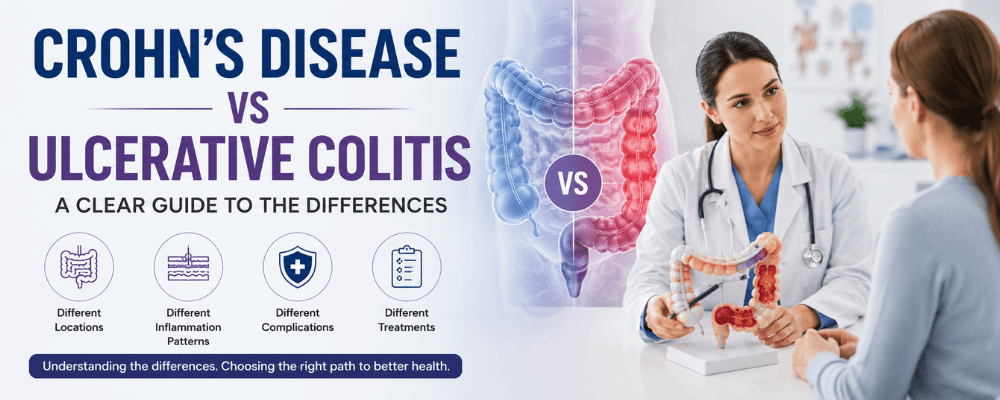
Inflammatory bowel disease (IBD) affects millions of people worldwide, yet many patients are still confused about the difference between Crohn’s disease and ulcerative colitis. While both conditions fall under the umbrella of IBD and share similar symptoms, they are distinct diseases with important differences in how they affect the digestive tract, how they are diagnosed, and how they are treated.
Understanding these differences is essential for patients seeking answers about their symptoms and treatment options. Early diagnosis and proper management can significantly improve quality of life and help reduce long-term complications associated with chronic intestinal inflammation.
At Spoke Research, ongoing clinical research continues to advance understanding of inflammatory bowel disease and improve treatment options for patients living with Crohn’s disease and ulcerative colitis. Through clinical trials and emerging therapies, researchers are working toward safer, more effective ways to control inflammation, maintain remission, and improve patient outcomes.
What Is Inflammatory Bowel Disease (IBD)?
Inflammatory bowel disease is a term used to describe chronic inflammatory conditions affecting the digestive tract. The two primary forms of IBD are:
Both conditions involve an abnormal immune system response that causes inflammation within the gastrointestinal tract. However, the location, pattern, and depth of inflammation differ significantly between the two diseases.
IBD is not the same as irritable bowel syndrome (IBS). While IBS affects bowel function, IBD involves actual inflammation and damage to the digestive tract that can lead to serious complications if left untreated.
Although the exact cause of IBD remains unknown, researchers believe it develops through a combination of:
- Genetic factors
- Immune system dysfunction
- Environmental triggers
- Gut microbiome imbalance
IBD is considered a lifelong condition with periods of flare-ups and remission.

What Is Crohn’s Disease?
Crohn’s disease is a chronic inflammatory condition that can affect any part of the digestive tract, from the mouth to the anus. However, it most commonly affects the end of the small intestine (ileum) and the beginning of the colon.
One of the defining features of Crohn’s disease is that inflammation can occur in patches, with healthy areas of tissue located between inflamed sections. This is often referred to as “skip lesions.”
Another important characteristic is that Crohn’s disease affects the full thickness of the bowel wall. Because inflammation extends deeply into the intestinal tissue, Crohn’s disease is more likely to cause complications such as:
- Strictures (narrowing of the bowel)
- Fistulas
- Abscesses
- Deep ulcers
- Bowel obstruction
Symptoms of Crohn’s disease may include:
- Chronic diarrhoea
- Abdominal pain
- Weight loss
- Fatigue
- Loss of appetite
- Rectal bleeding
- Fever
- Nutritional deficiencies
Because Crohn’s disease can affect the entire digestive tract, symptoms vary widely between patients.

What Is Ulcerative Colitis?
Ulcerative colitis is another form of IBD, but unlike Crohn’s disease, it only affects the colon and rectum.
Inflammation in ulcerative colitis typically begins in the rectum and spreads continuously upward through the colon. Unlike Crohn’s disease, ulcerative colitis does not involve skip lesions.
Another major difference is that inflammation in ulcerative colitis affects only the innermost lining of the colon rather than the full bowel wall.
Common symptoms of ulcerative colitis include:
- Bloody diarrhoea
- Urgency to have bowel movements
- Abdominal cramping
- Rectal bleeding
- Fatigue
- Weight loss
- Mucus in the stool
Because inflammation is limited to the colon, ulcerative colitis generally does not cause fistulas or deep bowel wall complications commonly seen in Crohn’s disease.
However, severe ulcerative colitis can still lead to serious complications including:
- Severe bleeding
- Toxic megacolon
- Colon perforation
- Increased colorectal cancer risk
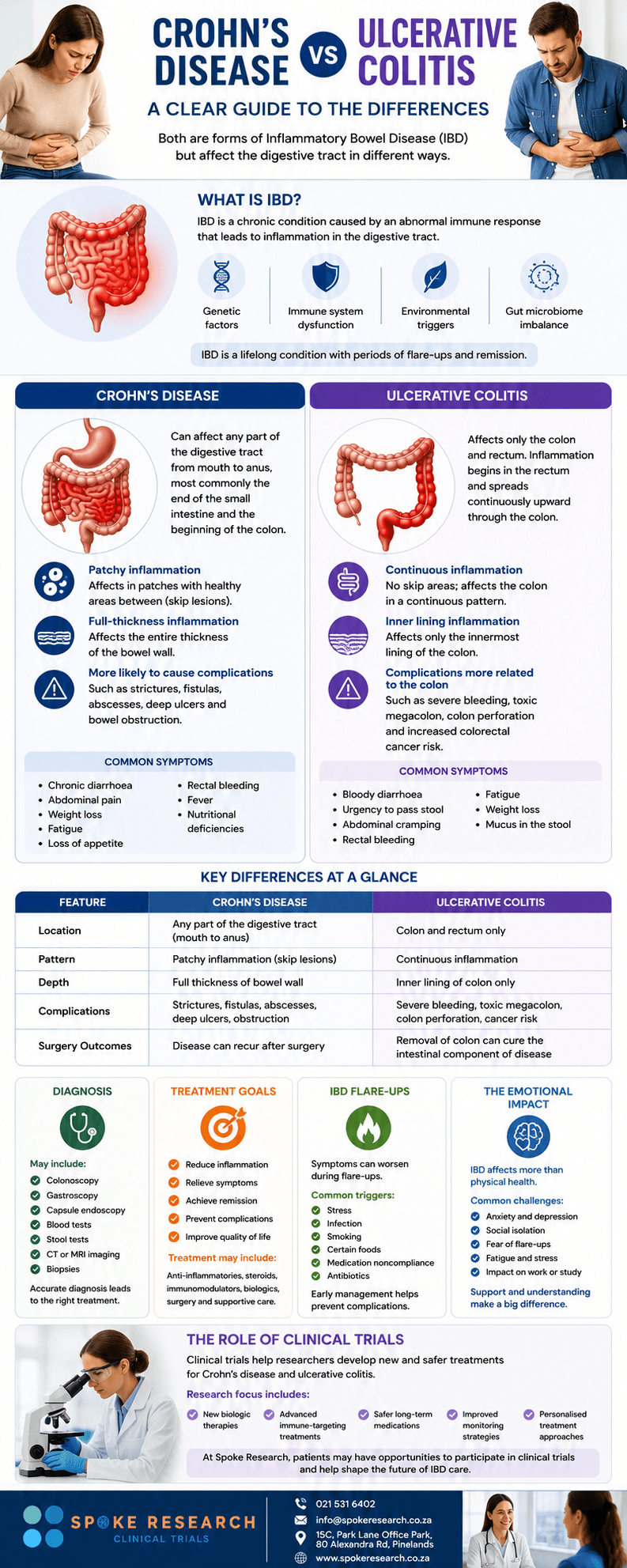
Key Differences Between Crohn’s Disease and Ulcerative Colitis
Although the two conditions share similarities, several important differences help doctors distinguish between them.
Location of Inflammation
Crohn’s disease can affect any part of the digestive tract, while ulcerative colitis only affects the colon and rectum.
Pattern of Disease
Crohn’s disease causes patchy inflammation with healthy areas between affected sections. Ulcerative colitis causes continuous inflammation beginning in the rectum.
Depth of Inflammation
Crohn’s disease affects the entire thickness of the bowel wall. Ulcerative colitis primarily affects the inner lining of the colon.
Complications
Crohn’s disease is more likely to cause fistulas, strictures, and abscesses due to deeper tissue involvement. Ulcerative colitis more commonly causes bleeding and continuous colon inflammation.
Surgery Outcomes
Surgery may help manage complications in Crohn’s disease, but the disease can recur after surgery. In ulcerative colitis, removal of the colon can possibly cure the intestinal component of the disease.
Why Diagnosis Can Be Challenging
Because Crohn’s disease and ulcerative colitis share many symptoms, diagnosis can sometimes be difficult.
Patients may initially experience:
- Abdominal pain
- Diarrhoea
- Fatigue
- Rectal bleeding
- Weight loss
These symptoms may overlap with infections, IBS, coeliac disease, or other gastrointestinal disorders.
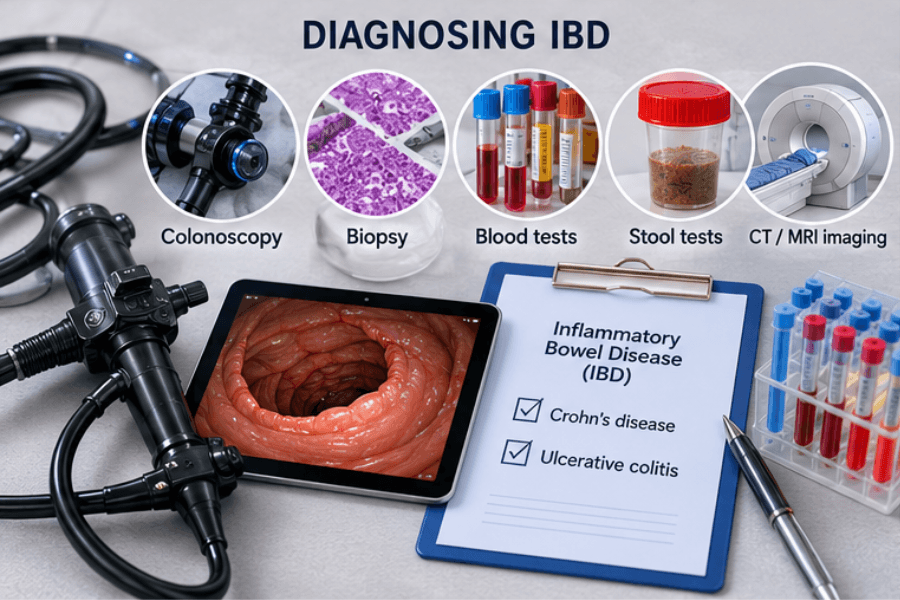
To make an accurate diagnosis, doctors may use several investigations including:
- Colonoscopy
- Gastroscopy
- Capsule endoscopy
- Blood tests
- Stool tests
- CT or MRI imaging
- Biopsies
Colonoscopy is especially important because it allows direct visualisation of intestinal inflammation and enables tissue samples to be collected for analysis.
Accurate diagnosis is essential because treatment strategies may differ between Crohn’s disease and ulcerative colitis.
Understanding IBD Flare-Ups
Both Crohn’s disease and ulcerative colitis involve periods of active inflammation known as flare-ups.
During a flare, symptoms may worsen significantly and interfere with daily life. Flare-ups can vary in severity and duration.
Common triggers may include:
- Stress
- Infection
- Medication noncompliance
- Smoking
- Certain foods
- Antibiotic use
- Changes in the gut microbiome
Some patients experience long periods of remission between flares, while others may have more persistent disease activity.
Managing flare-ups early is important because ongoing inflammation can increase the risk of long-term complications.
Treatment Approaches for Crohn’s Disease and Ulcerative Colitis
Although treatment plans vary depending on disease severity and location, the goals of IBD treatment are generally similar:
- Reduce inflammation
- Relieve symptoms
- Achieve remission
- Prevent complications
- Improve quality of life
Treatment options may include:
Anti-Inflammatory Medications
These medications help reduce intestinal inflammation and are commonly used in mild to moderate disease.
Corticosteroids
Steroids may be used short-term to control severe flare-ups but are generally not recommended for long-term use due to side effects.
Immunomodulators
These medications suppress abnormal immune system activity that contributes to inflammation.
Biologic Therapies
Biologics are advanced medications that target specific inflammatory pathways within the immune system.
Biologic therapy has transformed the treatment of moderate to severe IBD and may help:
- Reduce hospitalisation
- Prevent surgery
- Heal intestinal tissue
- Maintain long-term remission
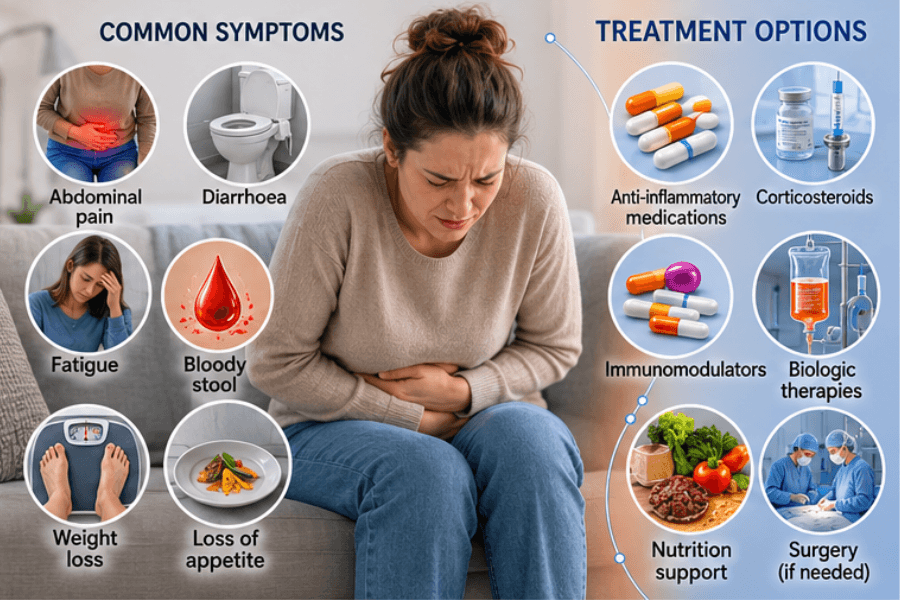
Surgery
Some patients with severe disease or complications may require surgery.
In Crohn’s disease, surgery may involve removing damaged bowel segments or treating fistulas and strictures.
In ulcerative colitis, colectomy (removal of the colon) may be recommended for severe disease or cancer prevention.
The Emotional Impact of IBD
Living with IBD involves more than just physical symptoms. Many patients experience emotional and psychological challenges related to chronic illness.
Common issues include:
- Anxiety
- Depression
- Social isolation
- Fear of flare-ups
- Fatigue-related stress
- Difficulty maintaining work or school responsibilities
Because symptoms can be unpredictable, patients often struggle with uncertainty about daily life and long-term health.
Support from healthcare providers, family, mental health professionals, and patient communities can play an important role in improving emotional wellbeing.
The Role of Clinical Trials in IBD Treatment Advances
Research continues to drive major advances in the understanding and treatment of Crohn’s disease and ulcerative colitis.
Clinical trials help researchers evaluate:
- New biologic therapies
- Advanced immune-targeting treatments
- Safer long-term medications
- Improved monitoring strategies
- Personalised treatment approaches
At Spoke Research, patients may have opportunities to participate in clinical trials investigating emerging therapies for IBD. These studies help expand treatment options while contributing to the future of digestive healthcare.
Clinical research is especially important for patients who:
- Have moderate to severe disease
- Do not respond well to standard therapies
- Experience frequent flare-ups
- Need alternative treatment options
By participating in clinical trials, patients not only gain access to potential new therapies but also help improve care for future generations living with IBD.
Looking Ahead: Living Well with IBD
Although Crohn’s disease and ulcerative colitis are chronic conditions, advances in treatment continue to improve outcomes for patients worldwide.
Earlier diagnosis, improved biologic therapies, minimally invasive procedures, and ongoing clinical research are helping many people achieve longer remission periods and better quality of life.
Managing IBD successfully often requires a combination of:
- Regular specialist care
- Medication adherence
- Nutritional support
- Stress management
- Ongoing monitoring
Every patient’s journey with IBD is unique, which is why personalised treatment plans are so important.
As research continues to evolve, there is growing hope for more targeted therapies, improved remission rates, and ultimately better long-term disease control for patients living with Crohn’s disease and ulcerative colitis.
To learn more about ongoing inflammatory bowel disease clinical trials and research opportunities, visit Spoke Research.
Medical surveys
Future treatments are now one step closer.
Contact us
Spoke Research Inc
Mediclinic Milnerton,
Suite 109
Racecourse Rd, Milnerton
Cape Town
0215518678
Mon – Thurs: 08:00-15:00
Fri: 08:00-12:00
Sat: Closed
info@spokeresearch.co.za