

Inflammatory bowel disease (IBD), including Crohn’s disease and ulcerative colitis, is a lifelong condition that can be unpredictable, frustrating, and, at times, difficult to manage. While many patients find relief through standard treatments, others continue to experience persistent symptoms, frequent flare-ups, or unwanted side effects.
For these individuals, clinical trials may offer a new path forward.
But how do you know when it’s the right time to consider joining a clinical trial? This guide explores the key signs, benefits, and considerations for patients living with IBD.
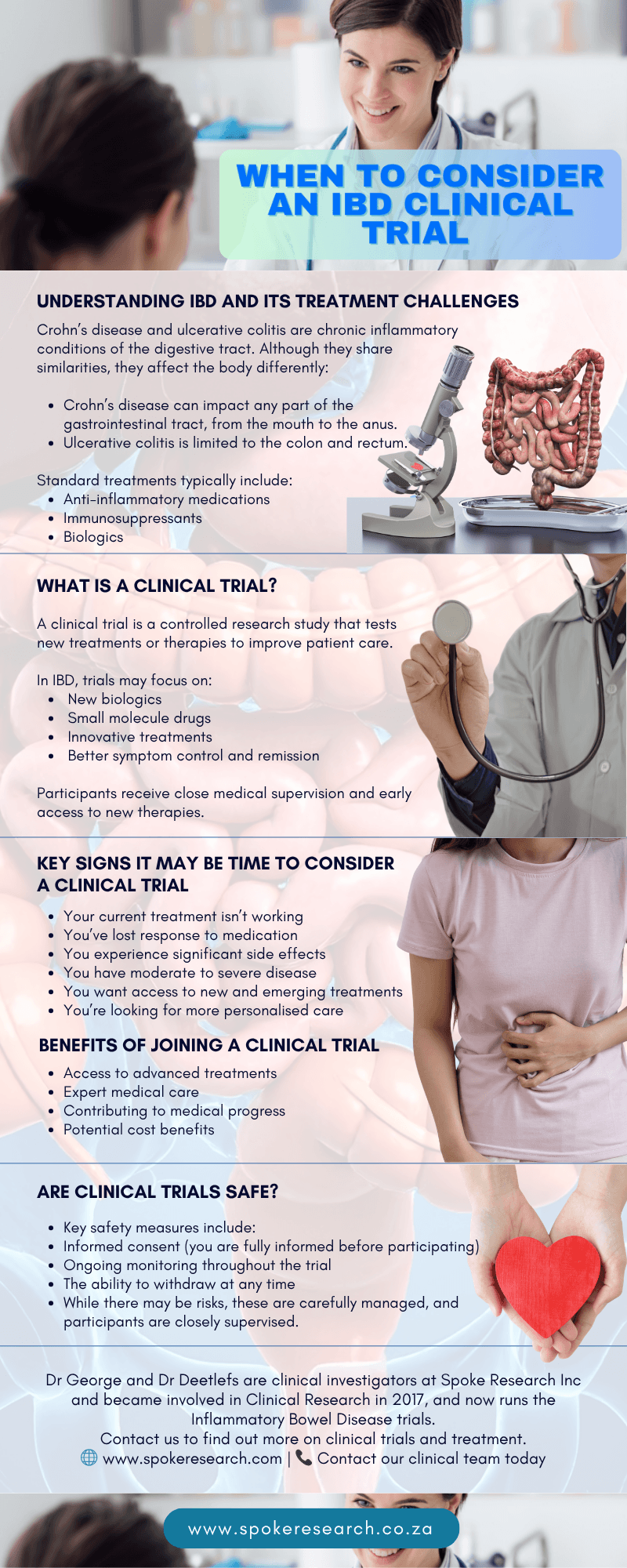
Understanding IBD and Its Treatment Challenges
Crohn’s disease and ulcerative colitis are chronic inflammatory conditions of the digestive tract. Although they share similarities, they affect the body differently:
- Crohn’s disease can impact any part of the gastrointestinal tract, from the mouth to the anus.
- Ulcerative colitis is limited to the colon and rectum.
Standard treatments typically include anti-inflammatory medications, immunosuppressants, and biologics. While these therapies can be effective, they don’t work for everyone—and even when they do, their effectiveness can decrease over time.
What Is a Clinical Trial?
A clinical trial is a carefully controlled research study that evaluates new medical treatments, medications, or therapies. These studies are essential for advancing medical science and improving treatment options for patients.
In the context of IBD, clinical trials often focus on:
- New biologic therapies
- Small molecule drugs
- Innovative treatment strategies
- Improved ways to manage symptoms and induce remission
Participants in clinical trials receive close medical supervision and access to treatments that are not yet widely available.

Key Signs It May Be Time to Consider a Clinical Trial
Not every patient needs to explore clinical trials—but for some, it can be a valuable option. Here are some signs that it might be worth discussing with your doctor:
- Your Current Treatment Isn’t Working
If you’re still experiencing symptoms such as abdominal pain, diarrhea, fatigue, or weight loss despite ongoing treatment, it may indicate that your condition is not well-controlled.
Persistent inflammation can lead to complications over time, making it important to explore alternative options.
- You’ve Lost Response to Medication
It’s not uncommon for patients to initially respond well to a treatment, only to find that it becomes less effective over time. This is especially true for biologic therapies.
Clinical trials often focus on patients who have developed resistance to standard medications, offering access to new therapies designed to overcome this challenge.
- You Experience Significant Side Effects
Some IBD medications can cause side effects ranging from mild discomfort to more serious health concerns.
If side effects are interfering with your quality of life, a clinical trial may provide access to treatments with different safety profiles.
- You Have Moderate to Severe Disease
Patients with more advanced IBD often require stronger or more targeted therapies.
Clinical trials frequently recruit individuals with moderate to severe Crohn’s disease or ulcerative colitis, making them a viable option for those needing more aggressive treatment.
- You Want Access to New and Emerging Treatments
Clinical trials give patients early access to cutting-edge therapies before they become widely available.
These treatments are often based on the latest scientific research and may offer improved outcomes compared to existing options.
- You’re Looking for More Personalised Care
Participants in clinical trials typically receive:
- Regular health assessments
- Close monitoring by medical professionals
- Detailed follow-ups
This level of care can be especially beneficial for patients who feel their condition requires more attention.

Benefits of Joining a Clinical Trial
Participating in a clinical trial can offer several advantages:
Access to Advanced Treatments
You may receive new therapies that are not yet available to the public.
Expert Medical Care
Clinical trials are conducted by experienced healthcare professionals who specialise in IBD.
Contributing to Medical Progress
By participating, you help researchers develop better treatments for future patients.
Potential Cost Benefits
In many cases, trial-related care and medications are provided at no cost to participants.
Are Clinical Trials Safe?
Safety is a top priority in all clinical trials. Before a study begins, it undergoes strict ethical and regulatory review.
Key safety measures include:
- Informed consent (you are fully informed before participating)
- Ongoing monitoring throughout the trial
- The ability to withdraw at any time
While there may be risks, these are carefully managed, and participants are closely supervised.
Common Concerns About Clinical Trials
“Will I receive a placebo?”
Some trials include placebo groups, but not all. In many cases, patients receive either the new treatment or standard care.
“Am I just a test subject?”
Clinical trials are conducted under strict medical guidelines, and patient safety is always the top priority.
“What if it doesn’t work?”
If a treatment is not effective or causes issues, you can withdraw from the study and explore other options.

How to Get Started
If you’re considering a clinical trial, the first step is to speak with a healthcare provider or research organisation.
They will assess:
- Your diagnosis and medical history
- Current treatments
- Disease severity
- Eligibility criteria for available trials
From there, you can decide whether participation is right for you.
The Role of Clinical Trials in the Future of IBD Treatment
The landscape of IBD treatment is rapidly evolving. Clinical trials play a crucial role in:
- Developing safer, more effective therapies
- Improving long-term disease management
- Moving toward personalised medicine
For many patients, they represent hope—especially when traditional treatments fall short.

Final Thoughts
Living with Crohn’s disease or ulcerative colitis can be challenging, particularly when symptoms persist despite treatment. Clinical trials offer an opportunity to access innovative therapies while contributing to the future of IBD care.
If your current treatment plan isn’t delivering the results you need, it may be time to explore new options.
A clinical trial could be the next step in your journey toward better health.
Your IBD Is Impacting Your Daily Life
Another important factor to consider is your overall quality of life. IBD doesn’t just affect the digestive tract—it can impact your energy levels, mental health, work productivity, and social life.
If you find that your condition is consistently interfering with daily activities, causing frequent hospital visits, or limiting your ability to enjoy normal routines, it may be a sign that your current management plan isn’t sufficient.
Clinical trials often aim not only to control inflammation but also to improve long-term well-being, making them a worthwhile option for patients seeking a more meaningful and sustained improvement in their day-to-day lives.
Interested In Learning More?
Spoke Research connects eligible patients with clinical trials for Crohn’s disease and ulcerative colitis in South Africa.
Reach out to their team to see if you qualify and take the next step toward improved care.
Contact Spoke Research
📍 Location: 2nd Floor, 4, Golf Park Terraces, Raapenberg Rd, Pinelands
📞 Phone: 021 531 6402
🌐 Website: https://spokeresearch.co.za
📧 Email: info@spokeresearch.co.za
Medical surveys
Future treatments are now one step closer.
Contact us
Spoke Research Inc
Mediclinic Milnerton,
Suite 109
Racecourse Rd, Milnerton
Cape Town
0215518678
Mon – Thurs: 08:00-15:00
Fri: 08:00-12:00
Sat: Closed
info@spokeresearch.co.za