
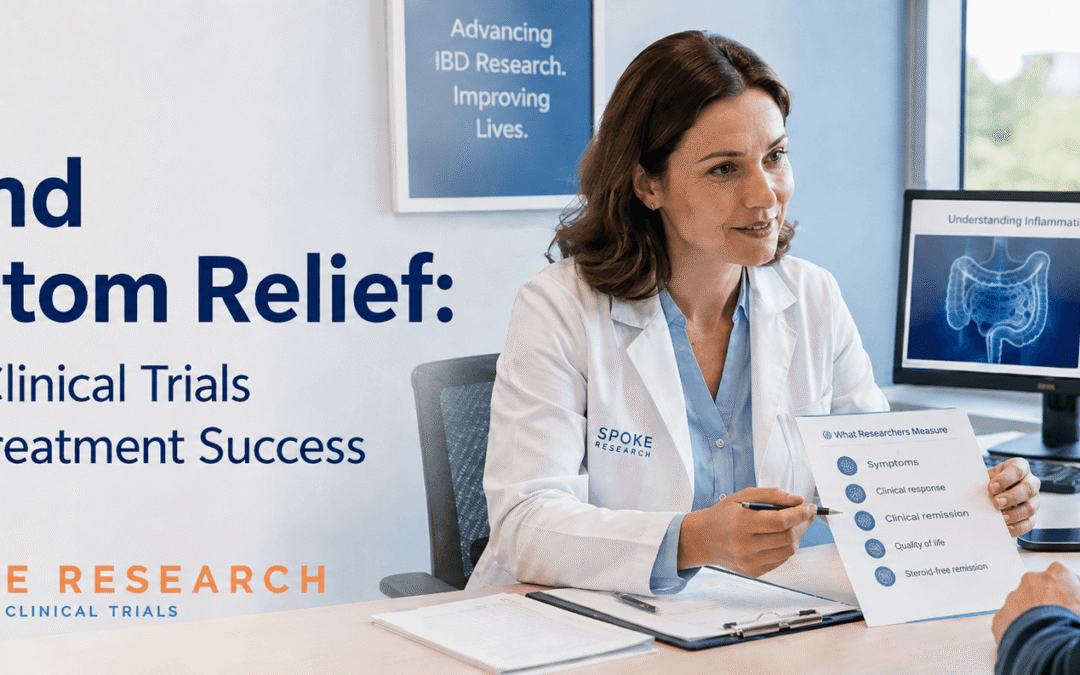
For people living with Inflammatory Bowel Disease (IBD), treatment goals increasingly extend beyond controlling symptoms. Modern clinical trials investigate whether new therapies can reduce intestinal inflammation, support remission and improve long-term health. Understanding how researchers measure treatment success helps explain why IBD studies may involve blood tests, stool samples, questionnaires, colonoscopy and regular follow-up rather than relying only on whether a patient feels better.
Crohn’s disease and ulcerative colitis can behave differently from one person to another, and feeling better does not always mean intestinal inflammation has resolved. Modern IBD research therefore combines symptoms with objective medical findings.
At Spoke Research, clinical trials focus on Crohn’s disease and ulcerative colitis and contribute to the evaluation of emerging treatment approaches.
Why Feeling Better Is Only One Part of Treatment Success
Improvement in abdominal pain, diarrhoea, urgency, rectal bleeding and fatigue matters, but researchers also need to know what is happening inside the body.
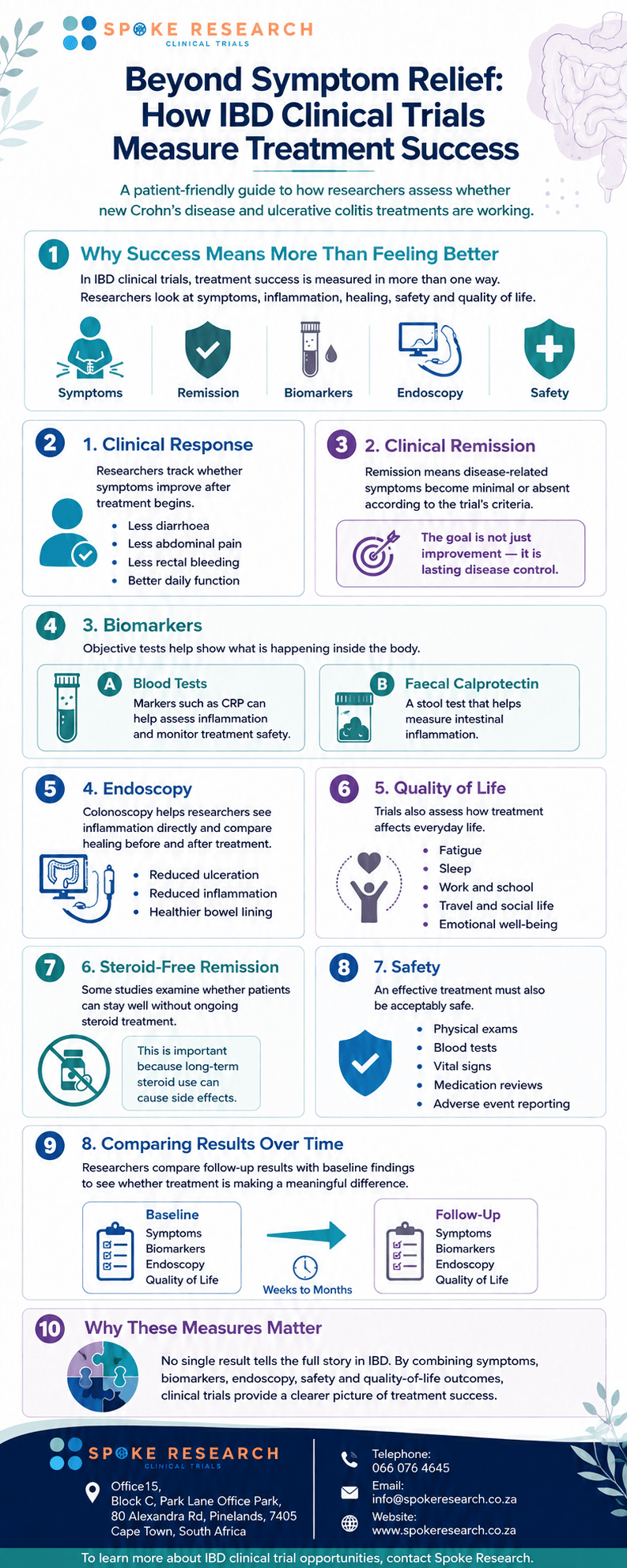
A patient may report fewer symptoms while inflammation remains active. Clinical trials therefore evaluate several outcomes together, including clinical response, remission, inflammatory biomarkers, endoscopic improvement, quality of life, corticosteroid use and safety.
Patients interested in research opportunities can learn more about Spoke Research studies.

Clinical Response and Remission
Clinical response describes meaningful improvement after treatment begins. It does not necessarily mean that the disease has entered full remission. Researchers may track stool frequency, rectal bleeding, abdominal pain, urgency and general well-being compared with the participant’s condition at the start of the study.
Clinical remission represents a deeper level of disease control, where disease-related symptoms become minimal or absent according to the study’s criteria. The National Institute of Diabetes and Digestive and Kidney Diseases explains that Crohn’s disease treatment aims to reduce inflammation, prevent flare-ups and maintain remission. Definitions of response and remission may vary between trials.
Biomarkers: Measuring Inflammation Objectively
Researchers also use biomarkers to gain objective information about inflammation.
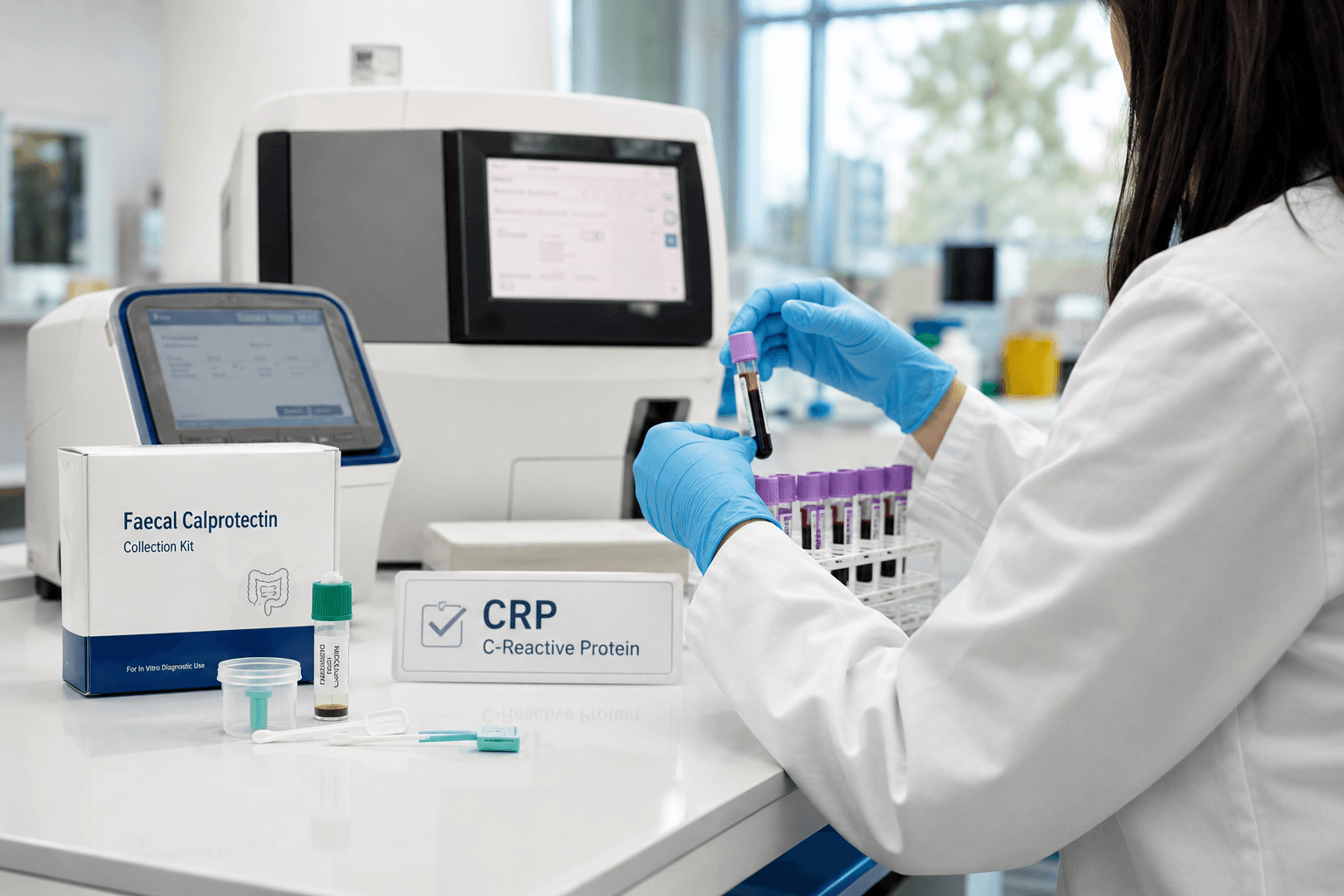
Blood tests may assess inflammatory activity and treatment safety. C-reactive protein, or CRP, is one commonly measured marker, although it is not specific to IBD.
Faecal calprotectin is measured from a stool sample and can provide useful information about intestinal inflammation. Changes in calprotectin levels may help researchers determine whether inflammatory activity is improving or worsening.
Mayo Clinic describes blood tests, stool studies and endoscopic procedures as important tools in the evaluation of IBD.
Endoscopy: Looking Directly at Intestinal Healing
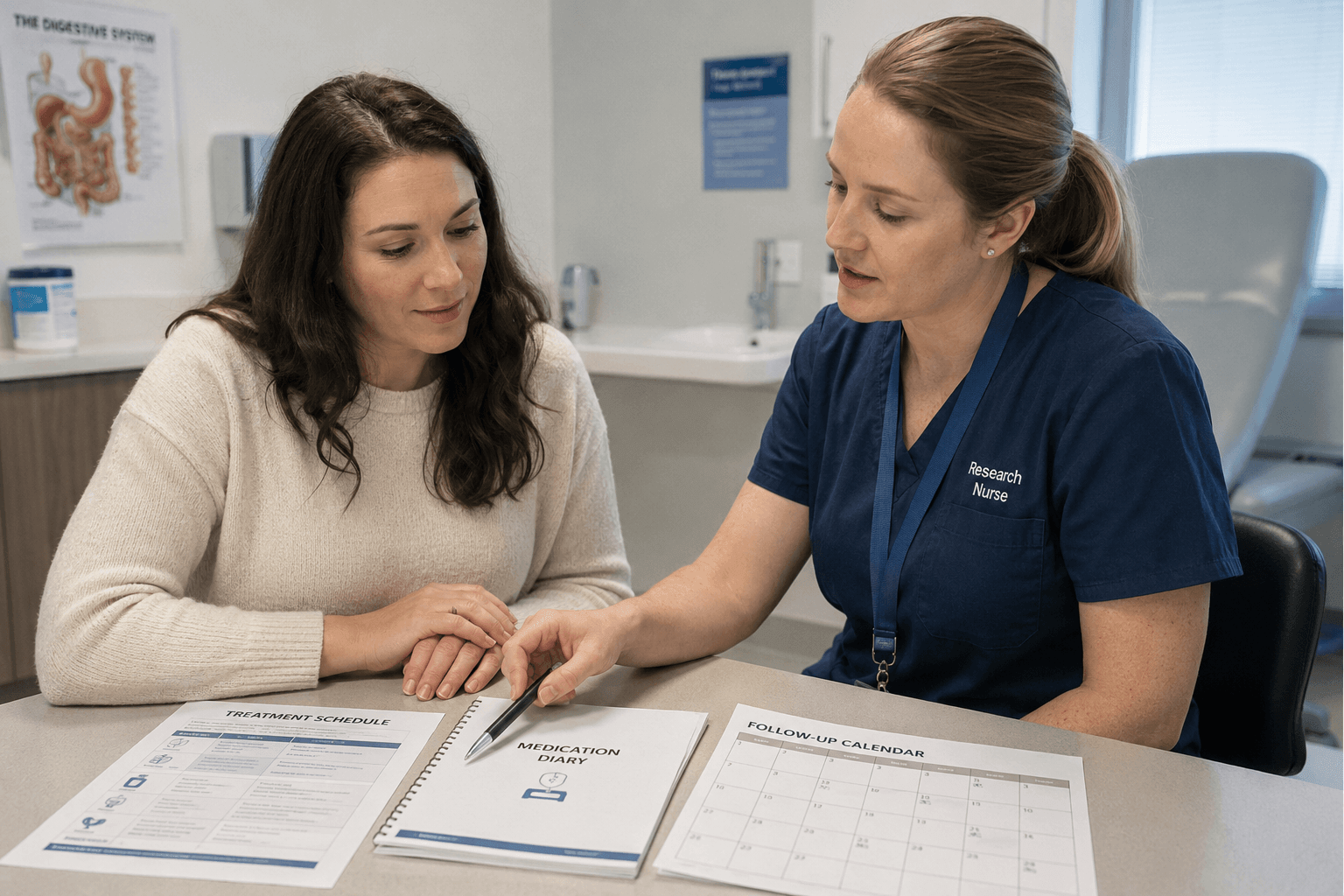
Colonoscopy allows clinicians to examine the intestinal lining and assess the location and severity of inflammation. Small tissue samples called biopsies may also be collected.
In clinical trials, endoscopy is valuable because researchers can compare findings before and after treatment. A participant may feel much better while some inflammation remains visible, which is why symptom improvement and endoscopic improvement are not always the same outcome.
Researchers may assess whether ulceration and inflammation have reduced and whether the bowel lining appears healthier. The Crohn’s & Colitis Foundation notes that endoscopic procedures are important for evaluating inflammation and monitoring IBD.
Quality of Life and Steroid-Free Remission
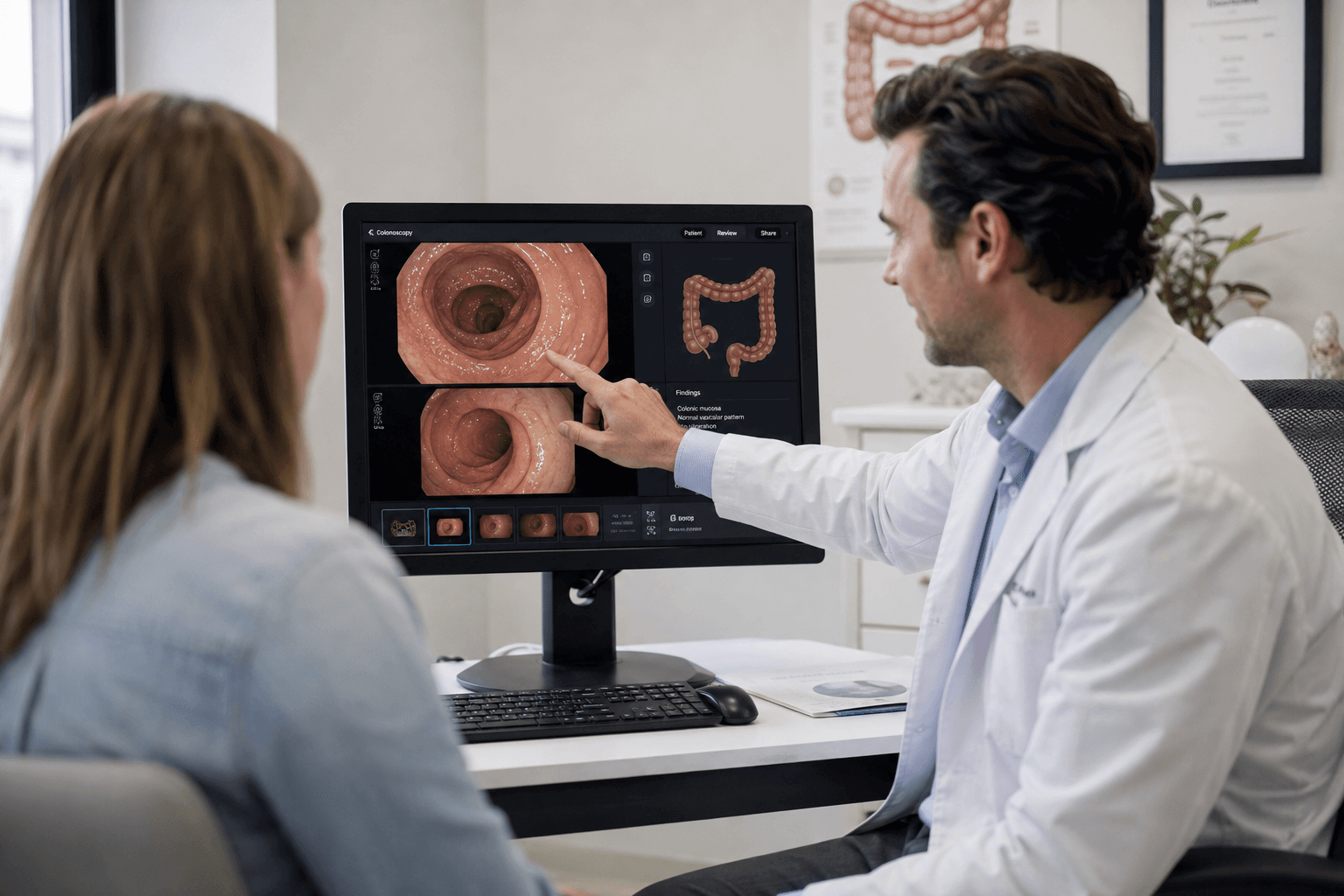
Successful treatment should make a meaningful difference to daily life. Clinical trials may therefore use validated questionnaires to assess how fatigue, urgency, sleep disruption and anxiety affect physical, social and emotional well-being.
Researchers also pay attention to corticosteroid use. Steroids can control acute IBD inflammation but are generally intended for short-term treatment because prolonged exposure can cause significant adverse effects.
Some studies therefore consider steroid-free remission an important outcome. A therapy that helps suitable patients maintain disease control while reducing long-term steroid use may represent meaningful progress.
Safety Is Part of Treatment Success
Clinical trials monitor participants for possible adverse events. Depending on the protocol, monitoring may include physical examinations, blood tests, vital signs, electrocardiograms, infection screening, medication reviews and recording new symptoms.
At Spoke Research, studies are conducted according to applicable ethical and regulatory requirements and Good Clinical Practice principles. Patients can learn more about the team on the About Spoke Research page.
Why Baseline Assessments Matter
Before researchers can determine whether treatment has worked, they need to establish the participant’s condition before therapy begins. This is known as baseline data.
Baseline assessments may include symptoms, blood results, stool markers, colonoscopy findings, current medication, previous treatment history and quality-of-life measures. Later findings are compared with these initial measurements.
For example, a participant may begin a trial with active intestinal inflammation and elevated inflammatory markers. Follow-up testing can show whether these measures change after treatment.
Patients considering participation can read more about how to join a clinical trial at Spoke Research.
Why Researchers Combine Different Outcomes
IBD is too complex to evaluate using one result alone. Symptoms, inflammatory markers and endoscopic findings may not all improve at the same time.
Researchers therefore combine several outcomes to build a more reliable picture of treatment response. They may consider whether symptoms improved, biomarkers decreased, intestinal inflammation became less severe, remission was achieved, corticosteroid use fell, quality of life improved and treatment remained safe.
The combined findings help determine whether an investigational therapy offers meaningful clinical benefit rather than simply changing one measurement.

From Trial Results to Future IBD Treatment
Clinical trial results are analysed across all participants rather than being based on one person’s experience.
Researchers examine how many participants responded, how many achieved remission, whether objective inflammation improved, how long benefits lasted and what side effects were reported. These findings help determine whether further research is justified and whether a treatment may eventually become part of future IBD care.
The Role of Spoke Research
Spoke Research specialises in clinical research involving Crohn’s disease and ulcerative colitis. Through structured studies, researchers can evaluate emerging therapies using objective testing, regular monitoring and patient-centred outcomes.
Clinical trial participation does not guarantee that an investigational treatment will work. Every study has specific eligibility requirements, potential benefits and possible risks, and patients should receive detailed information before deciding whether participation is appropriate.
Individuals who would like to explore research opportunities can complete the Spoke Research medical survey to provide information that may help the team assess suitability for current or future studies.
Conclusion: Measuring What Truly Matters in IBD Research
The future of IBD treatment increasingly focuses on outcomes that go beyond short-term symptom relief. Clinical trials examine the complete picture: how patients feel, what laboratory tests show, whether intestinal inflammation improves, whether remission can be maintained, how treatment affects quality of life and whether therapy can be used safely.
Every questionnaire, blood sample, stool test, colonoscopy and follow-up visit contributes a different piece of information. Together, these findings help researchers understand which investigational treatments may offer meaningful and lasting benefits.
Through carefully conducted clinical research, Spoke Research continues to contribute to the search for better treatment options for people living with inflammatory bowel disease.
Patients who would like to learn more about IBD clinical trials or enquire about possible eligibility are encouraged to contact Spoke Research.
Contact Spoke Research
Office15, Block C, Park Lane Office Park,
80 Alexandra Rd, Pinelands, 7405
Cape Town, South Africa
Telephone: 066 076 4645
Email: info@spokeresearch.co.za
Website: www.spokeresearch.co.za
Clinical trial participation is voluntary, and eligibility depends on the requirements of each individual study.
Medical surveys
Future treatments are now one step closer.
Contact us
Spoke Research Inc
Mediclinic Milnerton,
Suite 109
Racecourse Rd, Milnerton
Cape Town
0215518678
Mon – Thurs: 08:00-15:00
Fri: 08:00-12:00
Sat: Closed
info@spokeresearch.co.za